Everything your factory needs — connected, live, and in one system.
Running a manufacturing operation means managing a dozen moving parts at the same time — raw material coming in, production happening on the floor, finished goods piling up, dispatch going out, quality being checked, and suppliers waiting for feedback. Most factories handle all of this through a mix of registers, spreadsheets, and phone calls.
eMaker brings all of it into one connected platform. Each module below covers a specific part of your operation. Every module feeds into the same system — so data entered by your store team shows up on the management dashboard, on the production screen, and in your reports automatically. No double entry. No version conflicts. No chasing people for updates.
Live Dashboard & Daily Report
Real-time visibility into your entire factory — from one screen
What It Is
The emaker dashboard is the first thing you see when you log in — and it tells you everything that matters about your factory right now. Not what happened yesterday. Not what the supervisor reported at shift end. What is happening at this exact moment.
It pulls live data from every module — attendance, machine status, inventory alerts, pending GRIRs, dispatch queue, and supplier tasks — and shows everything in a single, clean screen. No toggling between reports. No calling the floor. One screen. Everything.
The Problem It Solves
Most factory owners and managers start the day with a round of calls — “How many people came in today?” “Which machines are running?” “Is the dispatch ready?” “What’s pending in stores?” These calls take 20–30 minutes every morning and the answers are already outdated by the time the meeting starts. emaker eliminates those calls entirely.
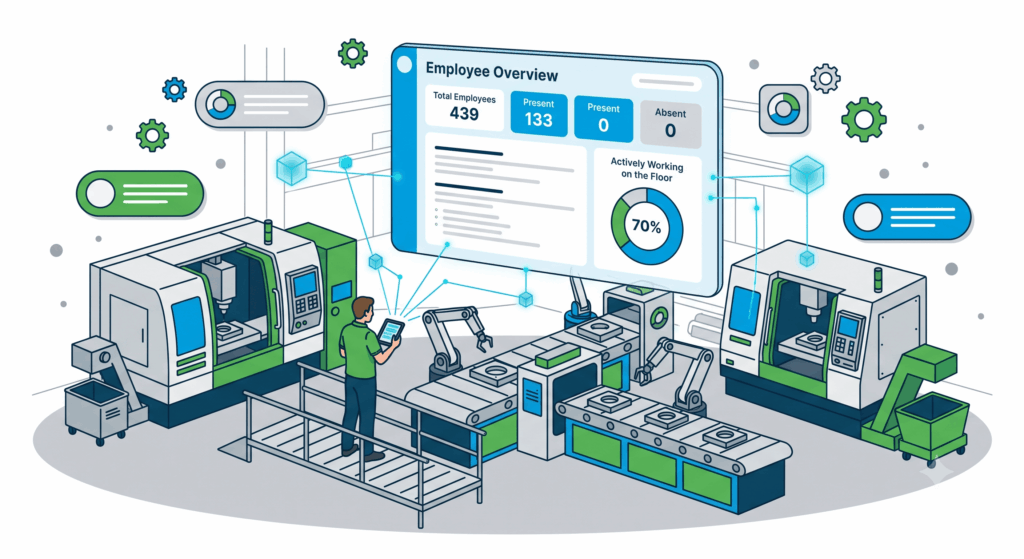
Employee Overview:
Total employees, present count, absent count, and how many are actively working on the floor — updated in real time as your supervisor logs the day.
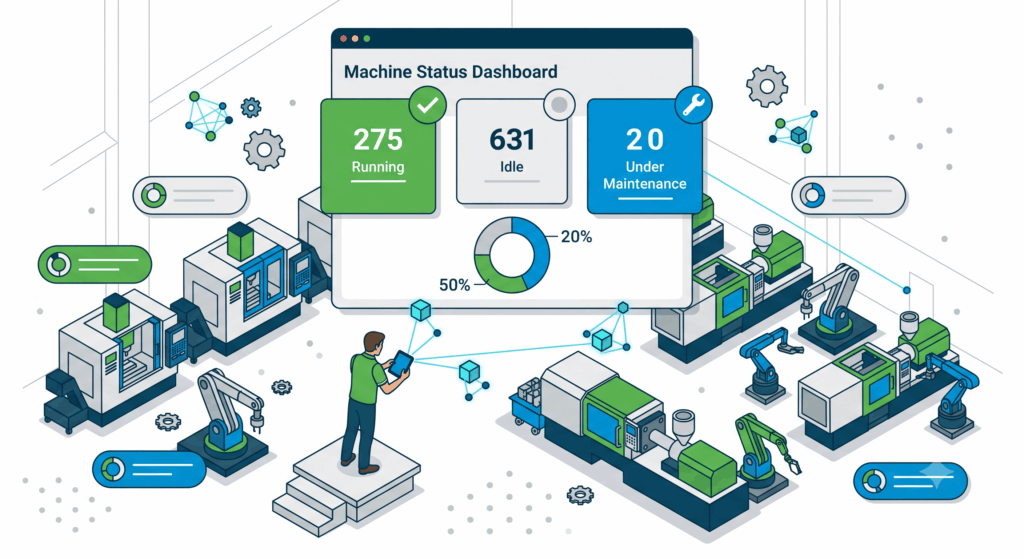
Machine Status:
How many machines are running, how many are idle, and how many are under maintenance — across your entire plant, at a glance.
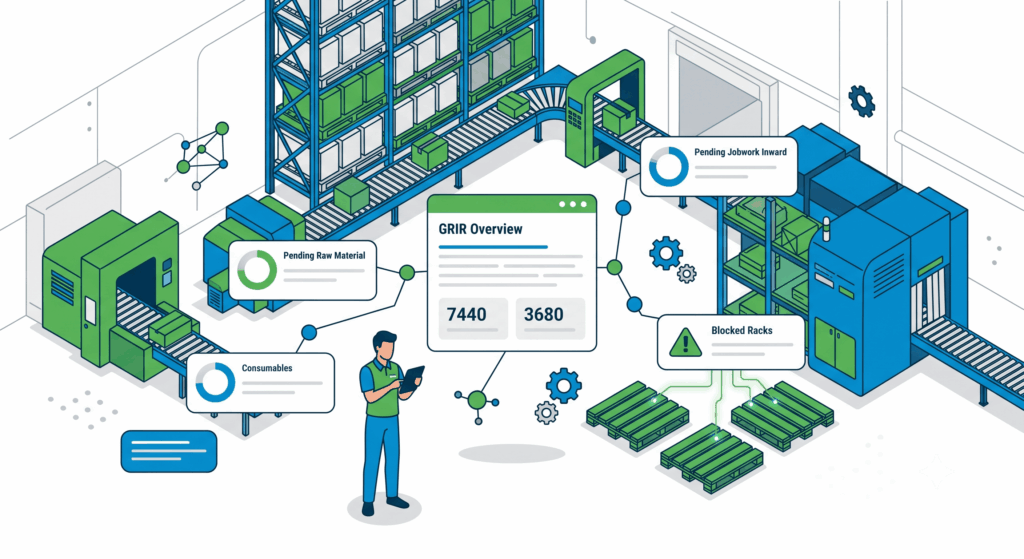
GRIR Overview:
Pending raw material GRIRs, jobwork GRIRs, consumables GRIRs, and blocked racks — so stores knows exactly what needs to be cleared today.
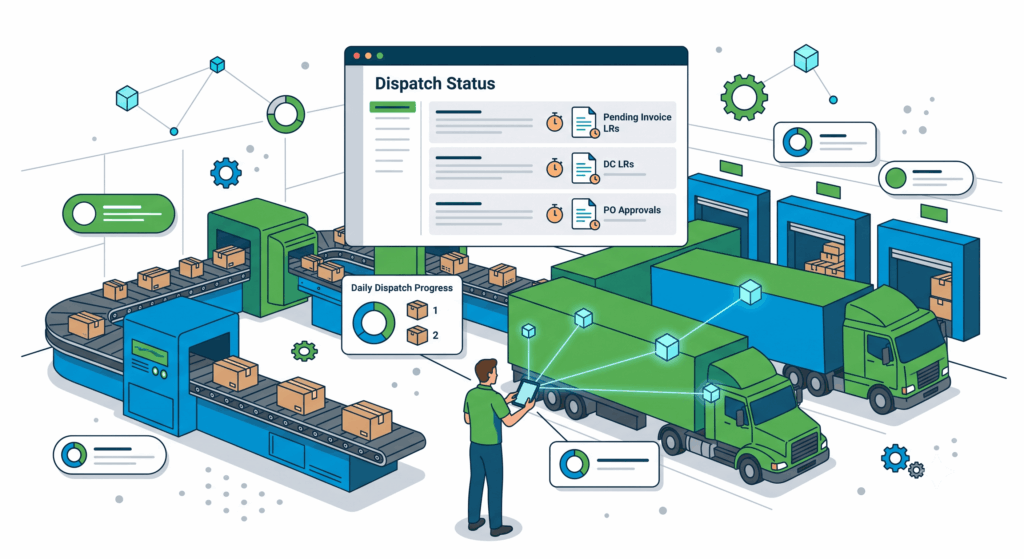
Dispatch Status:
Pending invoice LRs, DC LRs, customer PO approvals, and pending dispatches — the full outward picture for the day.
Supplier Performance:
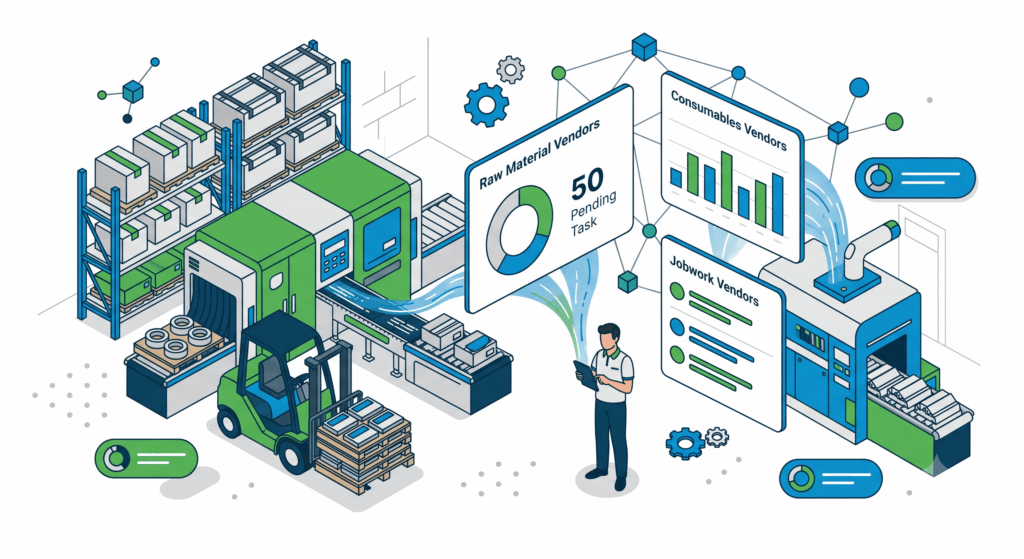
How many supplier performance entries are pending action — raw material, consumables, and jobwork vendors all shown separately.
Store Management:
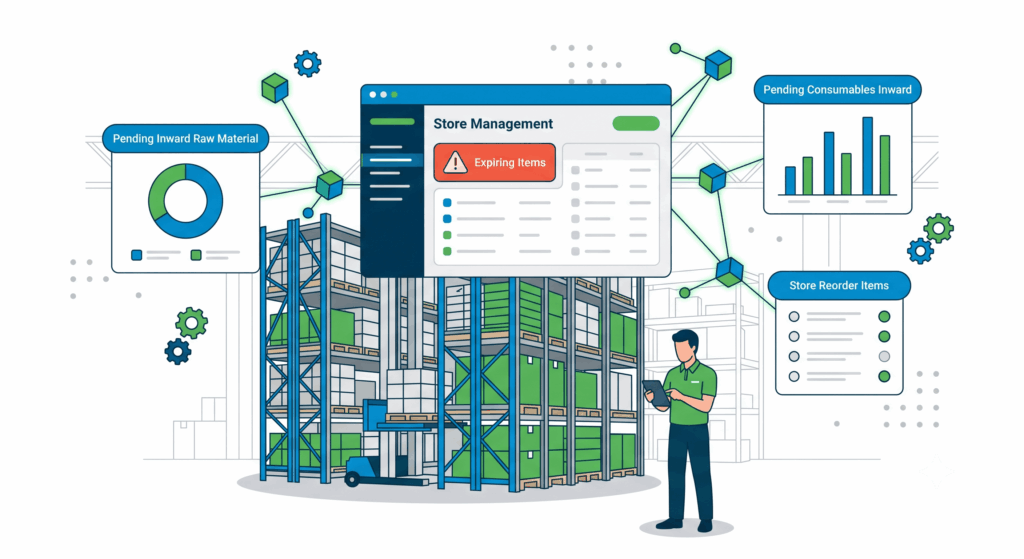
Expiring items, pending inward raw material, pending consumables inward data, and store reorder items — everything your store team needs to act on today.
Why This Matters for Your Business
No more end-of-day paper collection and manual Excel entry — production data is live
Dispatch team can check FG stock before confirming a customer delivery — no more surprise shortages
Management can see total FG inventory value in real time — helpful for financial reporting and audits
Rejections are captured at source, making quality analysis accurate and actionable
Tool maintenance history helps plan preventive maintenance before breakdowns happen
"Your factory is running right now. emaker makes sure you're never the last one to know what's happening in it."
Production Data & Finished Goods Report
Log every part produced. Know your FG stock at any moment.
What It Is
The production module is where your shop floor data begins. Operators log what they produced — tool number, part name, part number, quantity, and any rejections — directly from the Android tablet at their workstation. That entry immediately updates FG stock, production counts, and the management dashboard. No paper log. No end-of-shift batch entry. The moment a part is made, it exists in the system.